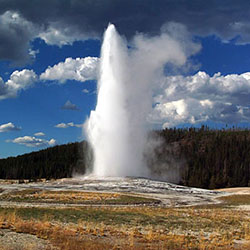
Old Faithful
No visit to Yellowstone is complete without experiencing at least one eruption of Old Faithful. Old Faithful erupts more frequently than any of the other big geysers, although it is not the largest or most regular geyser in the park. Its average interval between eruptions is about 91 minutes, varying from 65 – 92 minutes. An euption lasts 1 1/2 to 5 minutes, expels 3,700 – 8,400 gallons (14,000 – 32,000 liters) of boiling water, and reaches heights of 106 – 184 feet (30 – 55m). It was named for its consistent performance by members of the Washburn Expedition in 1870. Although its average interval has lengthened through the years (due to earthquakes and vandalism), Old Faithful is still as spectacular and predicatable as it was a century ago.
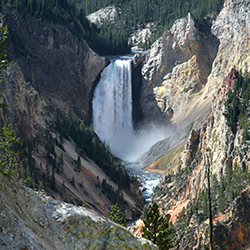
Grand Canyon of the Yellowstone
Yellowstone's Grand Canyon may not be as big as the Grand Canyon in Arizona, but it is nonetheless breathtaking. The Lower Falls of the Grand Canyon, at 308 feet high, is one of the most photographed features in all of Yellowstone. There are numerous vantage points on both the North and South sides of the Canyon, and we recommend that you take the time to view the Canyon from both sides. Also, be certain to take the 3/8 mile (one way) hike down to the edge of the Lower Falls. The experience at the lip of the falls is breathtaking.
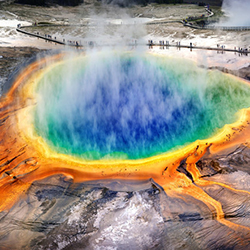
Grand Prismatic Springs
If you're looking for a bit of artistic inspiration, you'll find it at the Grand Prismatic Spring. Sitting in the Midway Geyser Basin, this is the largest hot spring in the United States, approximately 250 by 300 feet in size and around 160-feet deep. But it's Grand Prisimatic's rainbow waters that really make it fascinating: While the center of the pool's deep cerulean hue is pretty characteristic, the deep reds, bright yellows and fiery oranges encircling the edges are not. These colors are caused by pigmented thermophilic bacteria that thrive on the rich minerals produced by the geothermic activity. The color of the bacteria is determined by the temperature of the water — the center of the spring is too hot to support life — which is then reflected when light hits the organisms.