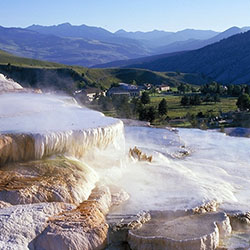
Geology
Yellowstone National Park is a treasure that inspires awe in travelers from around the world. New Zealand and Iceland are known for their geysers, but nowhere are there as many as in Yellowstone. SCenery, wildlife, and history were contributing factors influencing Congress to establish Yellowstone as the world's first national park in 1872.
At the heart of Yellowstone's past, present, and future lies volcanism. Catastrophic volcanic eruptions occurred here
- About 2 million years ago,
- then 1.2 million years ago,
- and then again 600,000 yeras ago.
The latest eruption spewed out nearly 240 cubic miles of debris. What is now the park's central portion then collapsed, forming a 28- by 47-mile caldera (or basin). The magmatic heat powering those eruptions still powers the park's famous geyser's, hot springs, fumaroles, and mud pots. The spectacular Grand Canyon of the Yellowstone River provides a glimpse of Earth's interior: its waterfalls highlight the boundaries of lava flows and thermal areas. Rugged mountains flank the park's volcanic plateau, rewarding both eye and spirit.
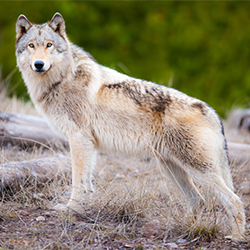
Wildlife
Yellowstone National Park has the largest concentration of wildlife in the lower 48 states. The wildlife that visitors want to see the most in Yellowstone are Bears, Wolves, Moose, Elk, Bison, Badgers, Otters, Fox and any newborn critter.
The following are the National Park Service Stastics for the wildlife of Yellowstone:
- 61 Different mammals
- Along with black bears over 500 grizzlies live in the greater Yellowstone ecosystem
- Gray wolves were restored in 1995; more than 370 live in the greater Yellowstone ecosystem.
- Wolverine and Lynx live in the park and are some of the rarest mammals to spot.
- Seven native species of ungulates—elk, mule deer, bison, moose, bighorn sheep, pronghorn and white-tailed deer—live her, including one of the largest herds of elk in the United States.
- Non-native mountain goats have colonized the northwestern and northeastern portions of the park.